Wednesday, 28 February 2024
News — Private sector integral player for Africa Minigrids Programme AMP
Renewable technologies continue to hold high potential in promoting greener futures and economies. As such their development and proliferation is key to the attainment of the set global climate goals. However, the attainment of these goals hinges on collective efforts from diverse players to ensure access to affordable, reliable, sustainable and modern energy as stipulated in goal 7 of the United Nations Sustainable Development Goals.
Critical players for the attainment of these energy goals include government, regulators, development partners and private players whose roles are largely being underpinned due to their growing importance in the climate question. This is due to their strategic position in society and their ability to propel the development of renewable energies through various innovations which can include the development of smart grids as well as financing of energy storage, that can help facilitate the integration of renewable energies such as minigrids.
These private players also include development financiers, who for their part “can also develop energy projects in areas where commercial banks are reticent about investing without some form of official collateral.” Furthermore, private players can provide the skills and knowledge that can promote clean technologies as is currently being done by the University of Eswatini (UNESWA’s) Centre of Sustainable Energy through a Memorandum of Understanding with the Eswatini Energy Regulatory Authority (ESERA) which is currently implementing the Africa Minigrids Program (AMP) project.
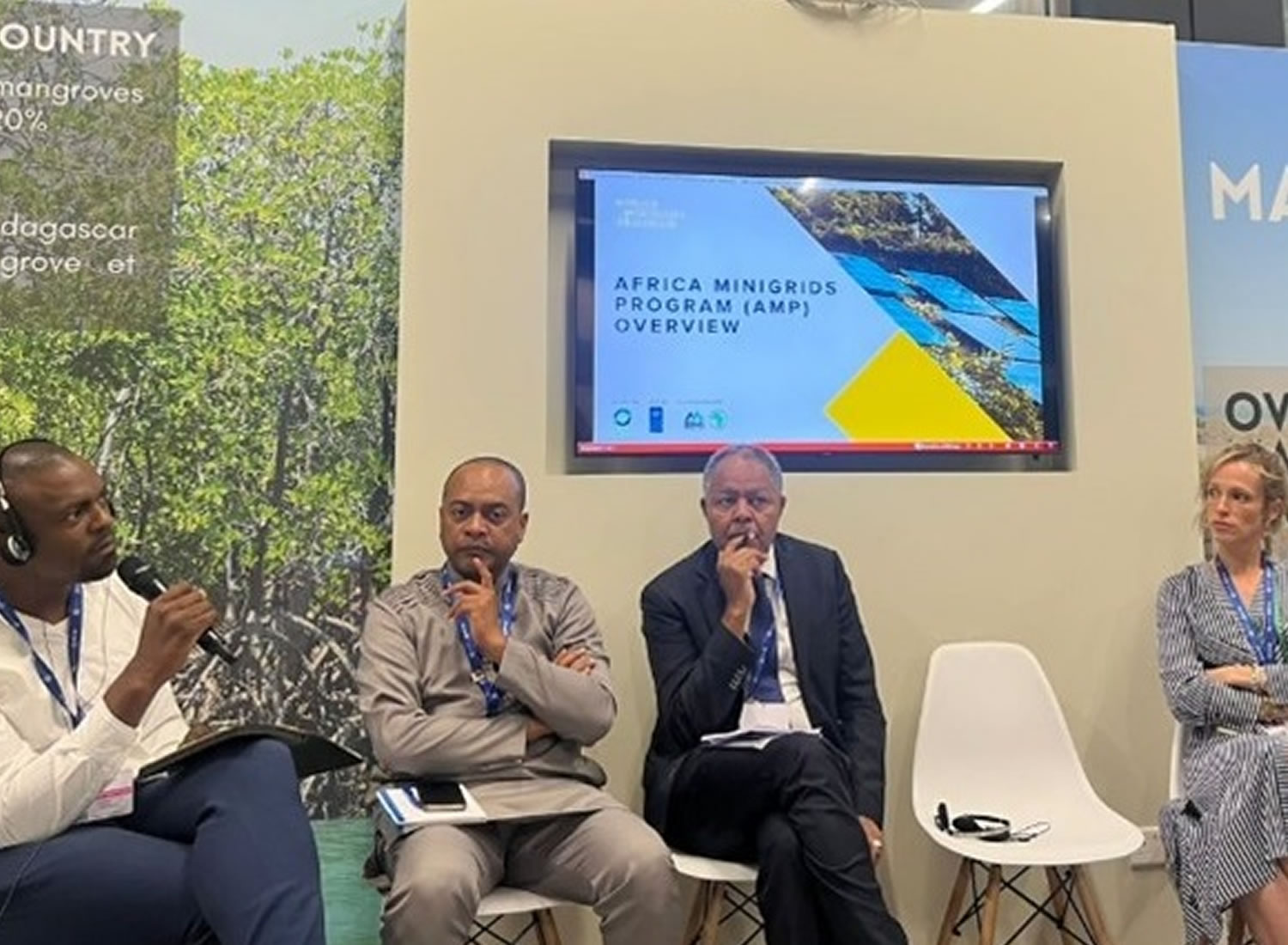
Lessons sharing - AMP Eswatini Project Manager, Saneliso Makhanya in a plenary session at COP 28
To underscore the role of the private sector in the advancement of renewables for a brighter future at global level, the Alliance of CEO Climate Leaders released an open letter to world leaders ahead of the Conference of Parties (COP 28) conference which was hosted in the United Arab Emirates between the 30th of November and the 12th of December 2023 underlining their commitment to developing and propelling decarbonisation solutions as recommended by the United Nations Framework Convention on Climate Change (UNFCCC) Conference of Parties.
However, they listed preconditions that would enable the smooth rollout of these carbon solutions which amongst others included the need for government support to curb technological constraints that delay efforts to scale up the manufacturing capacity of early-stage decarbonisation solutions such as minigrids. The need for regulators to streamline permitting and regulatory processes for renewable energy projects and the need for governments to incentivize corporate investments through enabling regulatory environments and carbon markets.

One vision PS in the MNRE Ms. Dorcas Dlamini at COP28
The Alliance of CEO Climate leaders also outlined the importance of harmonisation and interoperability between energy-related climate reporting standards that diverge across sectors and jurisdictions and emphasized how addressing these challenges would help maximize the impact of private sector ambition and action for sustainable energy development, reiterating the private sector's role in promoting renewables. Therefore, the successful implementation of the pioneer minigrids programs such as The Eswatini project is expected to be a national demonstration that will inspire more communities and the private sector to adopt mini-grid technologies as stable renewable energy alternatives to grid power.
Testament to the importance of collaboration and benchmarking AMP- Eswatini participated in the COP -28 in the United Arab Emirates (UAE) for lessons sharing with alternate developing countries which were at various stages of implementing their AMP’s in their various jurisdictions at the time of the conference. These included Madagascar, which underlined how it reinvented energy business in country around solar parts, through collaborations with the private sector.
Speaking on the sidelines of COP 28, the PS in the Ministry of Natural Resources and Energy (MNRE) Ms Dorcas Dlamini equally reiterated the importance of the private sector in promoting transformative change through the financing of transition projects such as solar PV and biomass as well as through Public Private Partnerships, energy efficiency in industrial processes and conservation.
However, despite the concerted efforts that can be made by private players and alternate energy players, the proliferation of renewable energy technologies such as solar minigrids is still threatened by various setbacks which include the dominance of fossil fuels in the existing energy mix which sometimes causes resistance from those with fossil fuel interests. In addition, despite the rapid decline in solar energy prices and continuing reduction in the costs of wind energy in recent years, variable energy supply may be difficult for some countries to manage owing to a lack of storage technology. Furthermore, renewable energies still face uncertainty about their creditworthiness as nascent industries that lack an established credit history. Therefore, in light of these and other setbacks, tailored solutions based on a host of underlying factors but all united by one commonality, a desire to access cleaner, safer and more sustainable energy will
Lessons sharing - AMP Eswatini Project Manager, Saneliso Makhanya in a plenary session at COP 28