Monday, 27 November 2023
News — Africa Minigrids Program (AMP) Eswatini fulfilling COP27 clean energy vision
As global temperatures soar, the world gets constant reminders every day that the climate question cannot be burked. Global warming is taking place at an unprecedented rate and the responsibility of reducing its drastic impact continues to sit on the shoulders of both developed and developing nations in the race to reach the set 1.5 Degrees Celsius Long-Term Temperature Goal of the Paris Agreement.
This places great responsibility on key industries such as the energy industry to fast-track programs and projects that can be instrumental in helping to reduce Green House Gas (GHG) emissions. Eswatini’s energy industry led by the Ministry of Natural Resources and Energy (MNRE) is promoting and undertaking green initiatives that align with the set United Nations (UN) Sustainable Development Goals (SDGs) for clean energy.
One of those initiatives is the Africa Minigrids Program (AMP) which is a country-led technical assistance program with the objective of supporting access to clean energy by increasing the financial viability and promoting scale-up commercial investment in renewable energy minigrids in Africa with a focus on cost -reduction levers and innovative business models. The program which is supported by the Global Environment Fund (GEF), led by the United Nations Development Programme (UNDP) in Partnership with Rocky Mountain Institute (RMI) is being implemented in Eswatini by the Eswatini Energy Regulatory Authority (ESERA) as mandated by the MNRE which is its implementing partner.
COP 27 Clean Energy Resolution
The AMP was launched on November 15 2022 at the UNFCCC COP 27 which was held in Egypt to rapidly and cost-effectively provide electricity and new development opportunities in an initial 21 African countries in alignment with the UN Sustainable Development Goals 7 and 13 which are aimed at Ensuring access
to affordable, reliable, sustainable and modern energy for all and increasing the share of renewable energy in the Global Energy Mix.

Fig 1
AMP Eswatini Progress
Presently, there is an already operational minigrid, providing electricity to the remote community of Mvundla in the outlying areas of Manzini whilst progress is being made towards the development of a second minigrid pilot in the remote community of Bulimeni in the same region. The existing minigrid was constructed by EEC and co-financed into the AMP project. With the Mvundla minigrid, the project thereby seeks to demonstrate increased economic viability/feasibility and attractiveness of the existing minigrid as well as an increased developmental impact for the community based on productive use support.
The project is being rolled out in three components which include, Policy and Regulation, Business Innovation and Private Sector Involvement as well as Digital Knowledge Management and Monitoring which are all being implemented through a multi-stakeholder approach. This includes strategic partnerships with stakeholders that are key to the project through various Memoranda of Understanding. To date, ESERA has signed cooperation agreements with three stakeholders to ensure the efficient implementation of the project through a robust and inclusive approach. These include the Small Enterprises Development Company (SEDCO) which will conduct business development support for small businesses, and facilitate stakeholder engagement, market research and data collection in the project area.
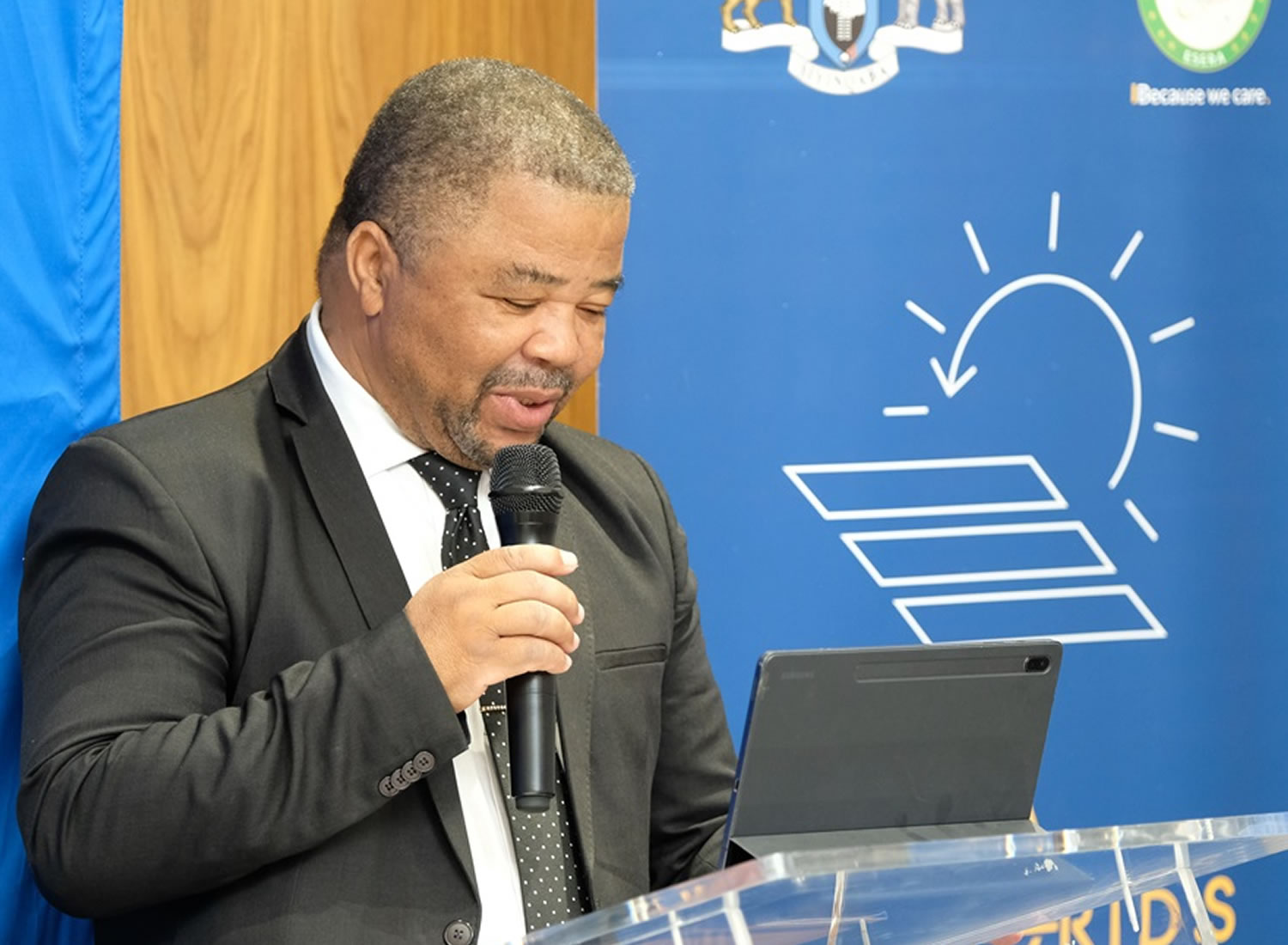
Fig 2
Coming together for a common energy purpose. ESERA CEO Skumbuzo Tsabedze and REASWA Chairperson Ms Constance van Zuydam at the signing ceremony held in Mbabane recently
The Renewable Energy Association of Eswatini (REASWA) on the other hand will offer capacity building and awareness raising on AMP activities and will help forge further partnerships and networks for AMP under the project. In addition, the University of Eswatini (UNESWA) through the Centre for Sustainable Energy Research will develop and offer short courses related to clean energy minigrids to strengthen the capacity of potential developers and operators to consider design parameters, innovative business models and cost-reduction levers, to improve project feasibility.
Speaking at the signing ceremony of the Memoranda of Understanding in Mbabane which was held in October, the ESERA CEO Skumbuzo Tsabedze said he was optimistic that the AMP Eswatini would foster a conducive environment for minigrid existence and significantly contribute to the reduction of Green House Gas emissions in the country. Speaking on the sidelines of the same event the UNESWA vice-chancellor, Professor Justice Thwala said the partnership with ESERA would help foster an environment that promotes innovative thinking at a time when the country is taking bold steps towards promoting a sustainable future.
“…through education and symbiotic synergies, it is possible “, UNESWA Vice-Chancellor Professor Justice Thwala addressing attendees at the ESERA MOU signing ceremony.
The AMP aligns with the country’s targets for renewable energy and expectations that minigrids will contribute to the achievement of universal energy access as set out by the National Energy Policy (2018) and the Kingdom of Eswatini Masterplan 2034.
As momentum rises for the upcoming United Nations Climate Conference (UNFCCC) COP 28 to be held in the United Arab Emirates between 30 November and 12 December 2023, members of the COP are polishing up preparations for the landmark event where progress will be reviewed on the implementation of the set universal climate targets. This will also include a review amongst other topics of the progress made on the AMP which was launched at COP 27 in Egypt.
Insert: The United Nations Framework Convention on Climate Change (UNFCCC) Conference of Parties (COP) meetings aim to review progress towards the overall goal of the UNFCCC which is to limit climate change for a greener universe.
Fig 3