Monday, 17 June 2024
News — AMP Eswatini's Derisking Renewable Energy Investment's (DREI) trajectory
Important highlights
The world is facing climate change and its effects at an accelerated rate, calling for the development and use of more renewable energy technologies to reduce the greenhouse gas effect which is caused by the rapid use of fossil fuels amongst other factors. As such the uptake of solar PV technologies is rising be it for use in home solar systems, embedded generation at domestic or commercial level and even as mini grids at communal level to power remote communities off the grid in most cases. In that vein, Eswatini is currently implementing the AMP which promotes clean energy in early-stage minigrid markets seeking to establish an enabling environment for subsequent private investment at scale.
However, the use of mini grids is still at a nascent stage in the country, owing to various barriers and associated risks in the development of this technology which can hold back private investments in these renewables. In light of this, policymakers need to identify these barriers and associated risks through derisking frameworks and put in place public interventions to address them to reduce the risk-return profile for mini grids in Eswatini. This in turn will raise the potential of private sector investment at scale and promote clean and affordable energy solutions through mini grids. Hence the AMP Eswatini engaged an international and national consultant to execute a DREI study on solar PV batteries minigrids, to gauge their potential in Eswatini beyond the two pilot projects in Mvundla which is in the Manzini region and Bulimeni in the Shiselweni region.
As part of that exercise, the consultants who were contracted by the AMP thereby gathered market data for mini grids in the country which included information on baseline public instruments being implemented by the Government of Eswatini and other development actors for solar PV technologies such as mini grids. The consultants also compiled data on opportunities, investment prospects, risks and barriers for mini grid development in the country which would be crucial for application and assessment in the program’s DREI methodology which was developed by UNDP and implemented in several other countries. Following the exchange of the compiled information between the national and the international consultant, a DREI methodology was developed after which the international consultant Laurene Desclaux travelled to Eswatini on her initial country mission to facilitate at a round table workshop with relevant industry players.
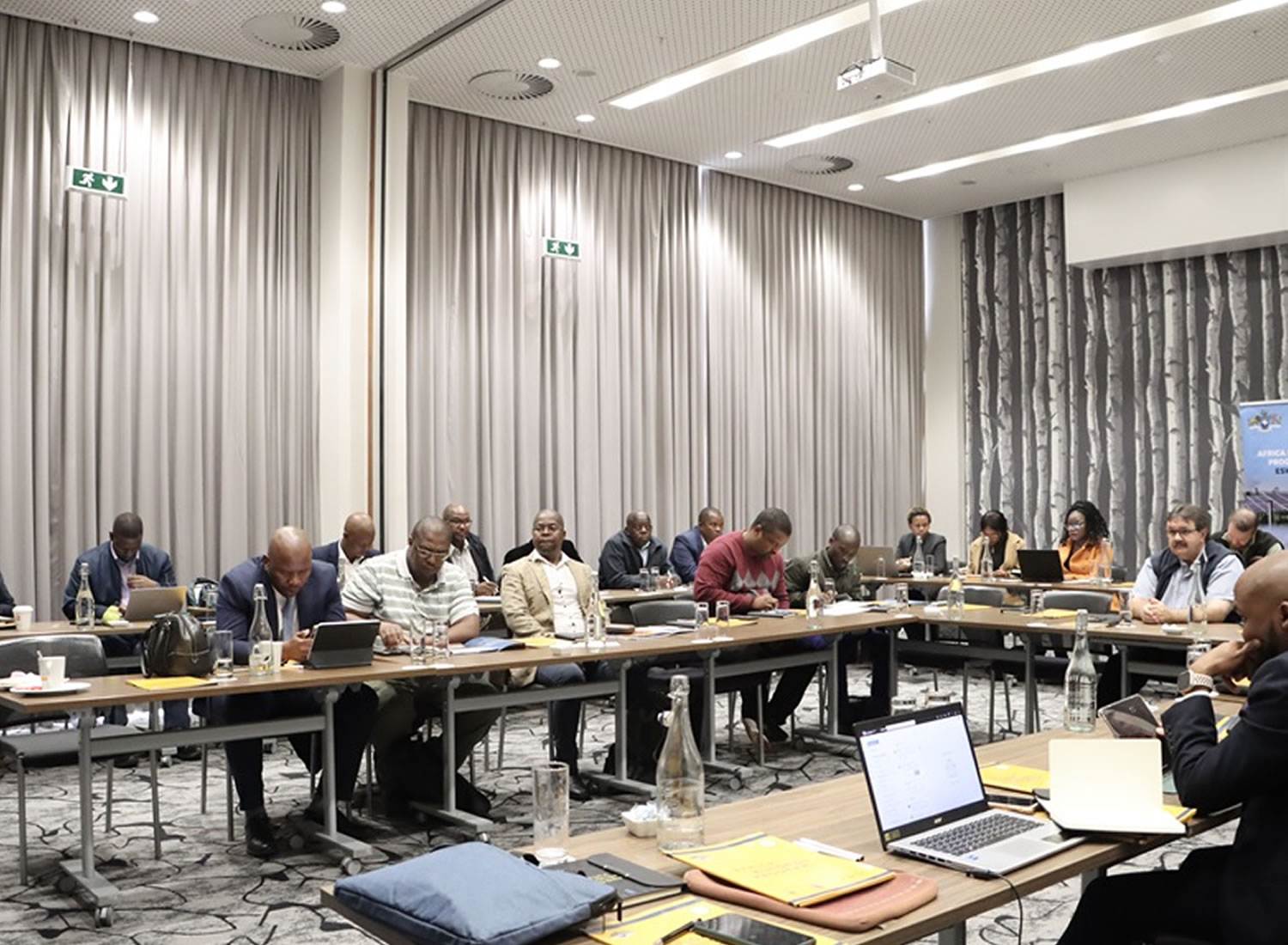
Attentive, AMP Eswatini DREI workshop attendees in session
AMP DREI Workshop
The round table workshop which was held in Mbabane on the 27th of May 2024 was attended by government ministries, energy stakeholders and development finance institutions amongst other stakeholders for an outline of the scope of the DREI study an introduction to the DREI methodology and for discussions on the main assumptions of the study. In addition, the workshop was also aimed at understanding the context for solar mini grids in the country, existing policies and regulations and understanding the vision of the national counterparts on the role of solar minigrids in Eswatini’s electricity sector amongst other workshop objectives.
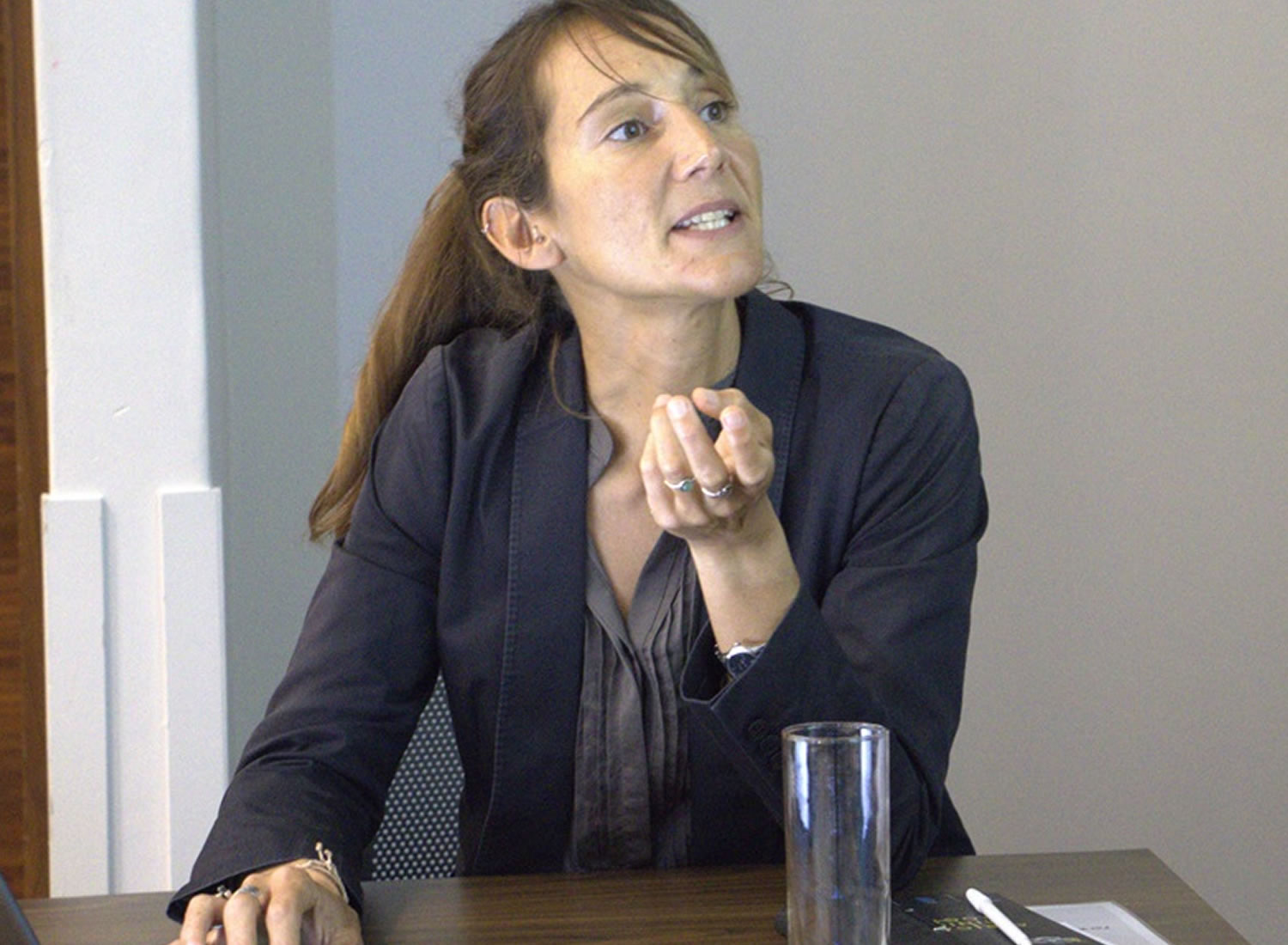
DREI AMP Eswatini International Consultant Laurene Desclaux elaborating a point
The workshop also presented the consultant with an opportunity for structured interviews with private sector investors and developers to obtain modelling data, and conduct wider consultations with the stakeholders in attendance. This dialogue with national counterparts and potential partners was important as it brought a holistic picture on perceptions on mini grid development in Eswatini.
A plenary session was also held during the workshop where several questions were asked by the stakeholders in attendance. These questions were on the scalability of mini grids looking at the small population, area and size of Eswatini. Questions were also asked on the exploration of Productive Uses of Energy and how this could help to drive up the consumption of the minigrids whilst further questions were asked on the social acceptance risk particularly in relation to the applicable tarriff for the minigrids. These questions largely bordered around the demand and affordability of electricity in the targeted communities for the AMP pilots. The consultant also elaborated on other risk categories which would be explored under the DREI methodology namely energy market risk, hardware risk, labour risk, developer risk, end-user credit risk, financing risk, currency risk and sovereign risk. Thereafter, a capacity-building exercise of key stakeholders for the DREI analysis was held on the 29th of May 2024 after the main workshop.
Following the market assessment and data collection mission, a summary of findings of the DREI analysis together with accompanying financial tools is expected to be presented on the international consultant's second mission to Eswatini. After which, a second-round table workshop for the dissemination of the national DREI analysis will be held.
The DREI analysis includes modelling for two risk environment scenarios which includes a business-as-usual scenario representing the current risk environment with its current financing costs and a post-derisking scenario after the implementation of public instrument packages. This will be followed by an evaluation of the public instruments’ effectiveness through set perfomance metrics. The findings will thereby be compared, contrasted and combined with other analyses as a benchmarking mechanism amongst other derisking activities.
Attentive, AMP Eswatini DREI workshop attendees in session